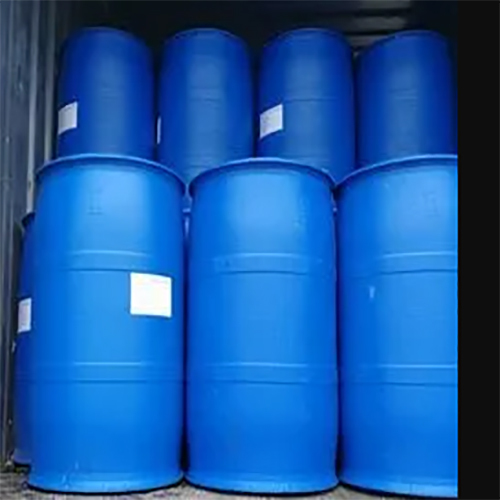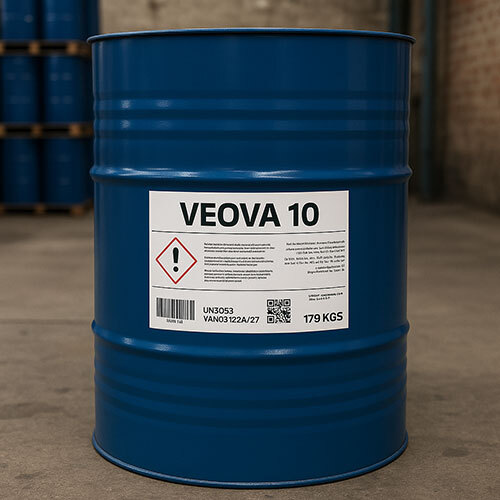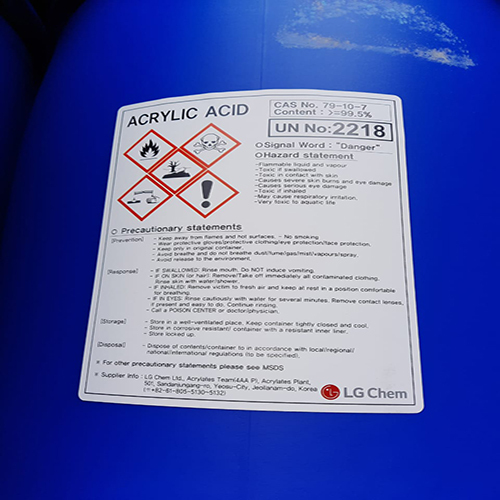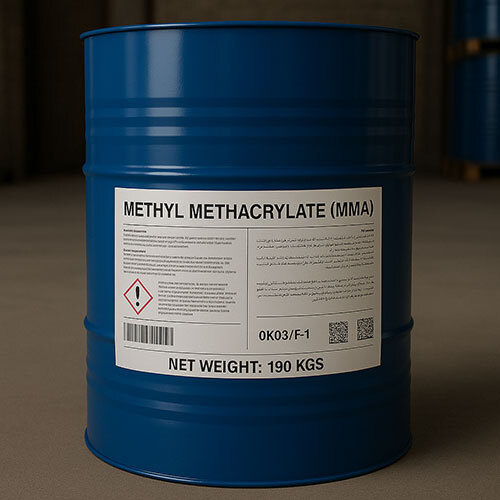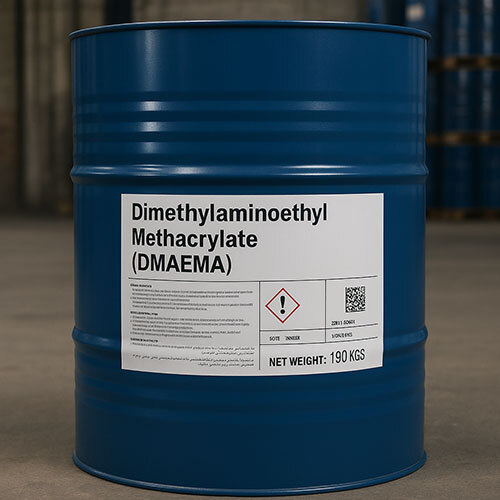
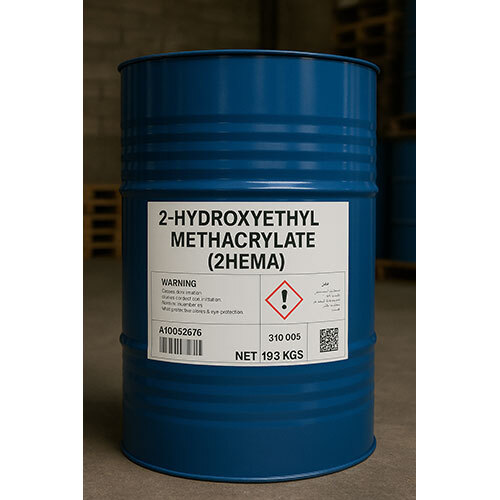
2 HYDROXYETHYL METHACRYLATE (2-HEMA)

2 HYDROXYETHYL METHACRYLATE (2-HEMA)

MOQ : 200 Kilograms

2 HYDROXYETHYL METHACRYLATE (2-HEMA) Specification

  • Physical Form
  • Liquid
  • Application
  • Industrial
  • Molecular Weight
  • 130.143 gmol1 Kilograms (kg)
  • Properties
  • 2 Hydroxy Ethyl Methacrylate is a colorless viscous liquid that readily polymerizes. Hydroxyethylmethacrylate is a monomer that is used to make various polymers.
  • CAS No
  • 868-77-9
  • Grade
  • Industrial
  • EINECS No
  • 212-782-2
  • Usage
  • Hydroxyethyl methacrylate is used in the manufacture of acrylic polymers which in turn are used in a range of commercial applications such as adhesives, paint resins, performance products, reactive systems, printing inks, coatings for automotive, appliance, and metal applications
  • Molecular Formula
  • C6H10O3
 

2 HYDROXYETHYL METHACRYLATE (2-HEMA) Trade Information

  • Minimum Order Quantity
  • 200 Kilograms
  • Supply Ability
  • 20000 Kilograms Per Week
  • Delivery Time
  • 10 Days
  • Packaging Details
  • 200KG
 

About 2 HYDROXYETHYL METHACRYLATE (2-HEMA)

Product Overview:

2-Hydroxyethyl Methacrylate (2-HEMA) is a multifunctional monomer widely used in coatings, adhesives, sealants, and medical applications. This clear, colorless liquid contains hydroxyl functionality, allowing for enhanced adhesion, crosslinking, and chemical resistance in polymer formulations. Its hydrophilic nature makes it particularly useful in biomedical materials and specialty resins.


Key Features & Benefits:

Hydroxyl Functionality Enhances adhesion, flexibility, and crosslinking.
Superior Water Absorption Ideal for hydrogels and biomedical applications.
Improved Chemical Resistance Increases durability in coatings and adhesives.
High Reactivity Facilitates rapid polymerization and copolymerization.
Versatile Compatibility Blends well with other acrylates and methacrylates.


Applications:

Coatings & Paints: Enhances durability, adhesion, and water resistance.
Adhesives & Sealants: Provides strong bonding and improved performance.
Biomedical Polymers: Used in hydrogels, contact lenses, and dental materials.
Acrylic Resins & Emulsions: Improves mechanical properties in formulations.
Ink & Surface Treatments: Increases print adhesion and chemical stability.


Get in Touch Today!


Request a Quote | Order a Sample | Speak to Our Experts


Applications Across Industries

2-HEMAs versatility is evident in its role in diverse industries. It is integral to the production of acrylic polymers, which are then used to formulate adhesives, paint resins, reactive systems, and functional coatings. These materials find application in automotive, appliance manufacturing, metal finishing, and printing industries, contributing to the durability and performance of various end products.


Physical and Chemical Characteristics

As a colorless, viscous liquid, 2-Hydroxyethyl Methacrylate is handled and stored in compliance with safety protocols due to its reactivity. Its prominent physical feature is its readiness to polymerize, making it a key building block in commercial polymer synthesis. The compound is recognized by CAS No. 868-77-9 and EINECS No. 212-782-2.

FAQs of 2 HYDROXYETHYL METHACRYLATE (2-HEMA):


Q: How is 2-Hydroxyethyl Methacrylate typically used in industrial settings?

A: 2-HEMA is primarily used as a monomer in the production of acrylic polymers. These polymers are further processed to manufacture commercial products like adhesives, coatings, paints, printing inks, and various specialty resins.

Q: What benefits does the use of 2-HEMA provide to manufacturers?

A: By incorporating 2-HEMA, manufacturers gain access to acrylic polymers known for their excellent adhesion, durability, chemical resistance, and versatility, enhancing the performance of coatings and adhesives in demanding applications.

Q: Where is 2-HEMA most commonly applied?

A: 2-HEMA finds its main applications in the automotive, metal, appliance, and printing industries. It is especially utilized in formulating paints, coatings, and adhesives that require high performance and resilience.

Q: What is the process for transforming 2-HEMA into usable commercial products?

A: 2-HEMA undergoes polymerization to form acrylic polymers. These are then formulated and processed into finished products such as adhesives, coatings, paints, and inks, tailored for industrial and commercial use.

Q: When should 2-HEMA be considered over other monomers?

A: 2-HEMA is preferred when superior adhesion, enhanced durability, and chemical resistance are required in end-use products, particularly in high-performance coatings and adhesives.

Q: How should 2-HEMA be stored and handled safely?

A: Due to its tendency to polymerize and its viscous nature, 2-HEMA should be stored in tightly sealed containers, away from heat and light, in well-ventilated areas, and handled following industrial safety guidelines.

Tell us about your requirement
product

Price:

Quantity
Select Unit

  • 50
  • 100
  • 200
  • 250
  • 500
  • 1000+
Additional detail
Mobile number

Email

More Products in Monomers Category

VEOVA 10 (Vinyl neodecanoat)

VEOVA 10 (Vinyl neodecanoat)

Minimum Order Quantity : 200 Kilograms

Physical Form : Liquid

Grade : industrial

METHYL METHACRYLATE (MMA)

METHYL METHACRYLATE (MMA)

Minimum Order Quantity : 200 Kilograms

Physical Form : Liquid

Grade : Industrial

Molecular Weight : 100.121 g/mol Kilograms (kg)

Molecular Formula : C5H8O2

Density : 940 kg/m Kilogram per cubic meter (kg/m3)

METHACRYLIC ACID (MAA)

METHACRYLIC ACID (MAA)

Minimum Order Quantity : 200 Kilograms

Physical Form : Liquid

Grade : Industrial

Molecular Weight : 86.06 g/mol Grams (g)

Molecular Formula : C4H6O2

Density : 1.02 g/cm Gram per cubic centimeter(g/cm3)

DIMETHYLAMINOETHYL METHACRYLATE (DMAEMA)

DIMETHYLAMINOETHYL METHACRYLATE (DMAEMA)

Minimum Order Quantity : 200 Kilograms

Physical Form : Liquid

Grade : Industrial

Molecular Weight : 157.21 Kilograms (kg)

Molecular Formula : C8H15NO2

Density : 0.933 g/mL at 25 C (lit.) Kilogram per cubic meter (kg/m3)


Back to top